- Home
- Blogs
- About
- Services
- Group Companies
- Contact Us
- सुचना *

-
Call Us On:
+977 1 5320150, 5320160 -
Send us a Mail:
info@cargonepal.com.np -
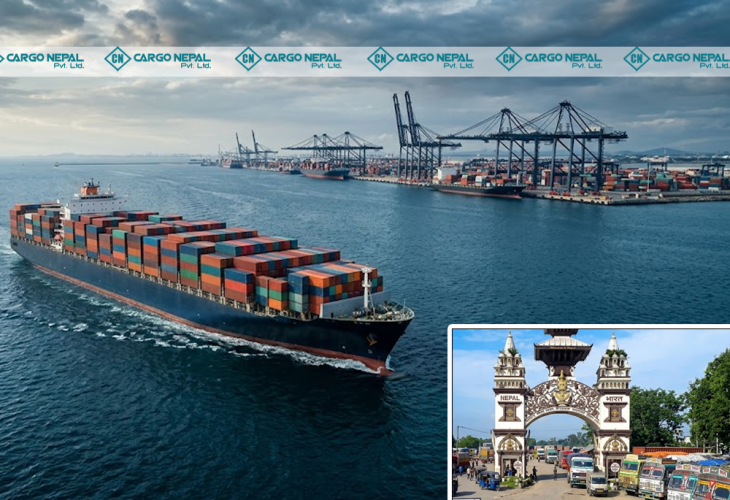
Managing Risk in Freight Transportation: Lessons Learned and Proactive Strategies for Nepalese Businesses in a Dynamic Logistics Landscape
Introduction
Freight transportation is the backbone of international trade, especially for a landlocked country like Nepal. Every day, hundreds of containers carrying everything from electronics to perishable goods cross borders, navigate highways, and pass through multiple handling points before reaching their final destination. But behind this seemingly routine process lies a complex web of risks delays, damage, theft, documentation errors, customs holdups, and geopolitical disruptions.
For Nepalese businesses engaged in import and export, understanding these risks is no longer optional. It is a competitive necessity. Those who treat logistics as a simple transactional activity often find themselves facing unexpected losses. Those who adopt a proactive, risk-aware approach not only protect their supply chains but also build trust with international partners.
This blog explores the most common risks in freight transportation, real lessons learned from the industry, and actionable strategies that Nepalese businesses can implement today to stay ahead of disruptions.
Understanding the Risk Landscape for Nepal
Nepal’s geography presents unique challenges. Being landlocked means all international freight must transit through neighboring countries primarily India, and to a lesser extent China. This dependency introduces several layers of vulnerability.
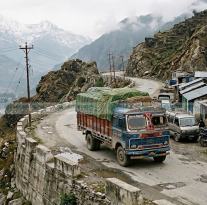
First, there are infrastructure-related risks. Road conditions, particularly during monsoon seasons, can deteriorate rapidly. Landslides, flooding, and poor visibility are not rare events; they are annual occurrences that shippers must account for. A route that functions smoothly for nine months of the year can become nearly impassable for weeks.
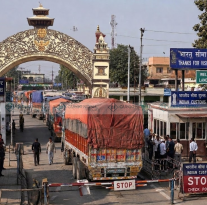
Second, there are regulatory and cross-border risks. Customs procedures, documentation requirements, and transit regulations can change with little notice. Even minor discrepancies in paperwork can lead to containers being held at border points for days, incurring demurrage charges and delaying deliveries.
Third, there are operational risks within Nepal itself. Inland haulage, warehousing, and last-mile delivery all have their own failure points. A truck breakdown, a driver taking an unauthorized route, or a warehouse inventory mismatch can undo weeks of careful planning.
None of these risks are unique to Nepal, but their frequency and potential impact are heightened here. That is why a localized, hands-on approach to risk management makes all the difference.
Lessons Learned from Real-World Freight Disruptions
Over the years, the logistics industry in South Asia has witnessed numerous incidents that serve as powerful teaching moments. While every shipment is different, certain patterns repeat themselves.
Lesson 1: Small Documentation Errors Can Have Large Consequences
One of the most common yet preventable causes of freight delays is incorrect or incomplete documentation. A missing tax identification number, a mismatched harmonized system code, or a shipping mark that does not exactly match the bill of lading any of these can stop a shipment dead at customs. In many cases, the goods themselves are perfectly fine, but the paperwork fails to convince the authorities. The result is storage fees, inspection delays, and missed delivery windows.
The lesson here is simple but often ignored: documentation must be verified by a trained professional before the shipment even leaves the warehouse. A second set of eyes catches what the first pair missed.
Lesson 2: Route Dependency Creates Hidden Fragility
Many Nepalese businesses develop a preferred route for their imports or exports, often because it has worked well in the past. Over time, that route becomes the default. But when a disruption hits a strike at a specific port, a sudden traffic jam at a border crossing, or a natural disaster companies with only one route suddenly have no options. They are forced to wait, and waiting costs money.
The lesson is that diversifying transportation routes is not about efficiency; it is about survival. Having a secondary corridor, even if it is slightly longer or more expensive, provides a safety net when the primary route fails.
Lesson 3: Insurance Is Not a Waste of Money Lack of Insurance Is
There is a persistent misconception in some business circles that freight insurance is an unnecessary expense, especially for small or regular shipments. This belief usually lasts until the first major loss. A single damaged container of high-value goods can wipe out the profit from dozens of successful shipments. And without insurance, there is no recovery.
The real lesson here is that insurance should be viewed as a strategic investment, not a cost. It allows businesses to take calculated risks, explore new markets, and move goods with confidence knowing that catastrophic loss is covered.
Lesson 4: Communication Gaps Create Cascading Failures
Freight transportation involves multiple parties: shippers, freight forwarders, customs agents, trucking companies, port authorities, and eventually the consignee. If any link in this chain fails to communicate clearly and quickly, small problems become large ones. A delayed vessel, for example, is not a disaster if the receiving warehouse is notified immediately. But if that information sits with one person and never reaches the others, the warehouse might send trucks to pick up cargo that has not arrived, wasting time and fuel.
The lesson is that transparent, timely communication across all stakeholders is not a nice-to-have; it is a core risk management tool.
Proactive Strategies for Nepalese Businesses
Knowing the risks is only half the battle. The real value comes from implementing practical strategies that reduce exposure and increase resilience.
Strategy 1: Partner with a Certified and Experienced Freight Forwarder
Not all freight forwarders are the same. A forwarder with local presence, international network, and relevant certifications like ISO 9001:2015 brings discipline and accountability to every shipment. They have documented processes, regular internal audits, and a culture of continuous improvement. For Nepalese businesses, choosing a forwarder that also has in-house customs brokerage capabilities is a major advantage. It eliminates handoffs between different companies and ensures that documentation and physical movement of goods are aligned from start to finish.
Strategy 2: Build Buffer Time into Supply Chain Planning
One of the most effective risk management techniques is also one of the simplest: add realistic buffer time to every schedule. International freight rarely moves exactly as planned. Weather, mechanical issues, staffing shortages, and inspection delays are common. A business that promises delivery in 15 days but builds a 20-day internal plan has room to absorb minor disruptions. A business that promises 15 days and plans for exactly 15 days has no margin for error. The latter will almost always disappoint customers.
Strategy 3: Use Multiple Corridors and Transport Modes
As mentioned earlier, relying on a single route is risky. Nepalese businesses should evaluate all available options: Kolkata, Visakhapatnam, Mundra, and the growing overland routes through China’s Gyirong and Rasuwagadhi ports. Each corridor has different strengths and weaknesses in terms of transit time, cost, reliability, and seasonal constraints. By spreading volume across multiple corridors, a business reduces its exposure to any single point of failure. Similarly, mixing air freight for urgent, high-value goods and ocean freight for bulk, time-tolerant cargo creates a balanced risk profile.
Strategy 4: Invest in End-to-End Visibility Tools
Technology has transformed freight risk management. Real-time tracking, GPS-enabled containers, and digital documentation platforms allow businesses to see exactly where their goods are at any given moment. More importantly, they provide early warnings when something goes off course. A container that has not moved in six hours should trigger an alert, not a surprise phone call the next morning. While no technology can prevent all disruptions, good visibility dramatically reduces response time, and faster response time means smaller losses.
Strategy 5: Conduct Regular Risk Audits
Risk is not static. A plan that worked perfectly last year may be completely unsuitable today because of changes in trade agreements, port operations, or regional politics. That is why regular risk audits are essential. Every quarter, businesses should sit down with their logistics partners and review recent shipments. What went wrong? What almost went wrong? What has changed in the external environment? These audits do not need to be lengthy or formal, but they must be consistent. Over time, they build a institutional memory that protects against repeated mistakes.
Strategy 6: Train Internal Teams on Basic Freight Risk Principles
Too often, risk management is seen as the sole responsibility of the logistics department or an external forwarder. But the truth is, everyone from the procurement team to the finance department makes decisions that affect freight risk. A procurement manager who orders goods with unrealistic delivery timelines is creating risk. A finance manager who delays payment to a forwarder is creating risk. Basic training on how freight works, what can go wrong, and how to spot early warning signs should be part of every company’s internal development program.
The Role of Customs Brokerage in Risk Reduction
Customs clearance is one of the most frequent sources of freight delays in Nepal. The rules are detailed, the documentation is strict, and the penalties for non-compliance can be severe. This is why having access to a licensed customs agent makes such a significant difference.
A licensed customs agent does more than file paperwork. They maintain relationships with customs officials, stay updated on regulatory changes, and know how to resolve classification disputes quickly. For Nepalese businesses, working with a freight forwarder that includes licensed customs brokerage as an in-house service eliminates the risk of miscommunication between separate entities. It creates a single point of accountability from the moment goods arrive at the port until they clear the border.
Compliance and Standards as Risk Shields
Another often-overlooked risk management tool is adherence to internationally recognized standards. Certification such as ISO 9001:2015 is not just a badge of quality; it is a systematic approach to identifying, documenting, and mitigating risks. Companies that follow such standards have clear procedures for everything from cargo handling to customer complaint resolution. They also undergo regular third-party audits, which means potential problems are caught before they cause real damage.
For Nepalese businesses, choosing logistics partners that prioritize compliance and certification is a form of indirect risk management. It reduces the likelihood of surprises and ensures that every shipment follows a predictable, high-quality process.
Membership in Global Logistics Networks
No single company can manage all risks alone. That is why global logistics networks matter. Membership in such networks gives a Nepalese freight forwarder access to vetted partners in every major trade hub from Shanghai to Hamburg, from Los Angeles to Dubai. When a shipment goes through a network partner, there is a baseline level of trust, shared standards, and mutual accountability.
For Nepalese importers and exporters, this means their goods are handled by professionals who follow agreed-upon procedures, even halfway across the world. It reduces the risk of theft, mishandling, and miscommunication at foreign ports and warehouses.
Conclusion
Risk in freight transportation will never disappear. The weather will remain unpredictable. Border procedures will remain complex. Machinery will break down. But risk does not have to mean loss. With the right strategies diversified routes, robust insurance, certified partners, real-time visibility, and regular audits Nepalese businesses can navigate this dynamic logistics landscape confidently.
The goal is not to avoid all problems. That is impossible. The goal is to respond faster, recover better, and learn continuously. Companies that embrace proactive risk management do not just survive disruptions. They gain a reputation for reliability. And in international trade, reliability is the most valuable currency of all.
For Nepalese businesses ready to take their logistics to the next level, the time to act is now. Assess your current supply chain vulnerabilities. Talk to a freight forwarder that understands local challenges and global standards. And make risk management a daily habit, not a once-a-year review.
Cargo Nepal Pvt. Ltd. provides comprehensive logistics solutions including air freight, ocean freight, project shipment, inland haulage, customs brokerage, and logistics consulting. Certified under ISO 9001:2015 and backed by a strong global network, the company is committed to trouble-free movement of goods for Nepalese businesses.