- Home
- Blogs
- About
- Services
- Group Companies
- Contact Us
- सुचना *

-
Call Us On:
+977 1 5320150, 5320160 -
Send us a Mail:
info@cargonepal.com.np -
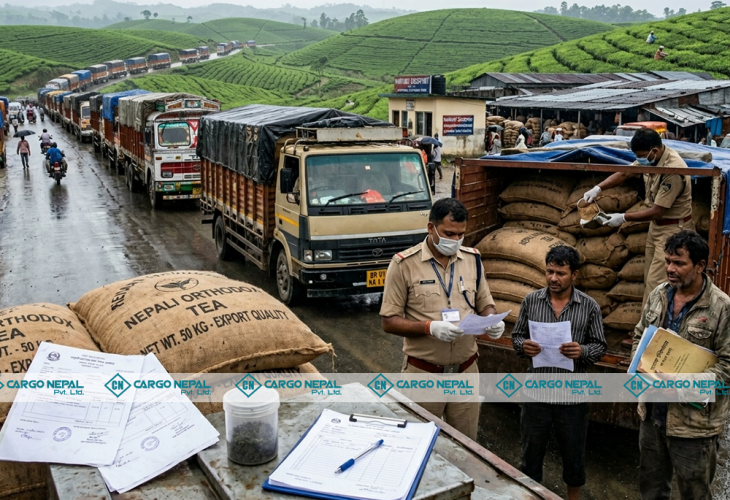
In early 2026, India rolled out a revised Standard Operating Procedure, or SOP, for agricultural imports from Nepal. For Nepali tea one of the country’s top export commodities the new rules mean more paperwork, stricter lab testing, and 100% sampling at customs points like Panitanki and Jogbani.
The stated goal: food safety and quality control.
The ground reality for traders: trucks are waiting 7–10 days longer than before, and each consignment now carries extra testing and demurrage charges.
Why This Matters for Nepali Tea
Nepal exports over 90% of its orthodox tea to India, much of it for re-export or blending. The industry supports 70,000+ small farmers, mostly in Ilam, Panchthar, and Dhankuta.
With the new SOP, three pain points have surfaced:
1. Rising Landed Costs
· Lab testing fees: ₹8,000–₹12,000 per lot, up from random checks earlier
· Demurrage + warehousing: Delays of a week can add NPR 15,000–25,000 per truck
· Documentation: Phyto-sanitary, origin, and new FSSAI compliance papers need agents, raising service charges
For small exporters working on 5–8% margins, these add-ons directly eat into profits.
2. Border Delays Disrupt Cash Flow
Tea is seasonal and price-sensitive. A week’s delay at Kakarbhitta means missing auction dates in Kolkata or Siliguri. Buyers renegotiate, and farmers get paid late. Several cooperatives in Ilam reported 20–30% slower payments in Q1 2026 compared to last year.
3. Quality Downgrade Risk
Orthodox tea is hygroscopic it absorbs moisture. Sitting in a container at the border during monsoon months affects cup quality. A lower grade means lower bids, and once a buyer labels a garden as “inconsistent,” regaining trust takes seasons.
The Ripple Effect: From Garden to Global Cup
Farmers: Forced to hold stock longer, many smallholders are selling green leaf to local factories at lower rates instead of waiting for export.
Processors: Working capital is locked. Factories that used to rotate funds every 15 days now wait 30+.
Brands: Nepali tea’s pitch has always been “high grown, hand-rolled, ethical.” If delays make supply unreliable, Indian blenders switch to Kenyan or Assam alternatives.
This is where logistics strategy matters more than ever. At Cargo Nepal Pvt. Ltd., we’ve been working directly with tea exporters since the SOP changes rolled out. Here’s what’s helping:
Pre-Clearance Documentation
Our in-house customs team, led by Managing Director and licensed customs agent Mr. Yam Pd. Rijal (License No. 863/079/080), reviews every file before the truck leaves the factory. Phyto-sanitary, origin certificates, FSSAI applications, and lot-wise test reports are checked in Nepal itself. That cuts rejection risk at the Indian gate.
Coordinated Sampling & Testing
We coordinate with NABL-accredited labs in Nepal so exporters can pre-test lots. When results are ready in advance, Indian customs often clear faster because the documentation is complete.
Smart Routing & Timing
Not every border point is moving at the same speed. Based on daily updates from our network, we advise clients whether to route via Kakarbhitta, Biratnagar-Jogbani, or Bhairahawa-Sunauli. During peak season, a 100 km detour can save 5 days.
Bonded Warehousing to Avoid Demurrage
If delays are unavoidable, we shift cargo to partner warehouses near the border. That stops the daily port demurrage clock and protects tea from moisture damage.
End-to-End Visibility
Tea buyers in India and abroad want updates. Our team provides real-time status at every stage, so exporters can give accurate delivery commitments and avoid penalties.
Many gardens are now exploring direct exports to Germany, Japan, and the US to reduce dependence on one transit market. Air freight from Bhadrapur and cargo consolidation through Kathmandu are becoming viable for high-grade lots.
Cargo Nepal supports this shift with combined services: customs brokerage, air freight booking, export documentation, and specialized tea-grade packaging solutions. For bulk shipments, we arrange project cargo and multimodal routing to reach third-country buyers without touching Indian ports.
1. Start paperwork 10 days earlier than you did last year.
2. Pre-test your lots with a recognized lab before dispatch.
3. Talk to your forwarder about border conditions before loading.
4. Consider split consignments so one delay doesn’t block your entire stock.
5. Explore air freight for your top grades the margin can cover the cost if it reaches buyers on time.
India’s new SOP isn’t going away, but the impact can be managed. With the right customs handling, documentation, and routing, exporters are still getting tea to market reliably.
At Cargo Nepal Pvt. Ltd., we’ve built our reputation on trouble-free global movement of goods. Our ISO 9001:2015 certified processes, licensed in-house customs expertise, and strong network across major trade hubs help tea exporters cut delays and protect margins.
If you’re exporting tea and the new SOP is slowing you down, let’s talk. Our team can review your current process and suggest a faster, compliant route from your factory gate to the buyer’s warehouse.
Contact Cargo Nepal Pvt. Ltd. for a consultation on tea export logistics. We handle the border, so you can focus on the blend.