- Home
- Blogs
- About
- Services
- Group Companies
- Contact Us
- सुचना *

-
Call Us On:
+977 1 5320150, 5320160 -
Send us a Mail:
info@cargonepal.com.np -
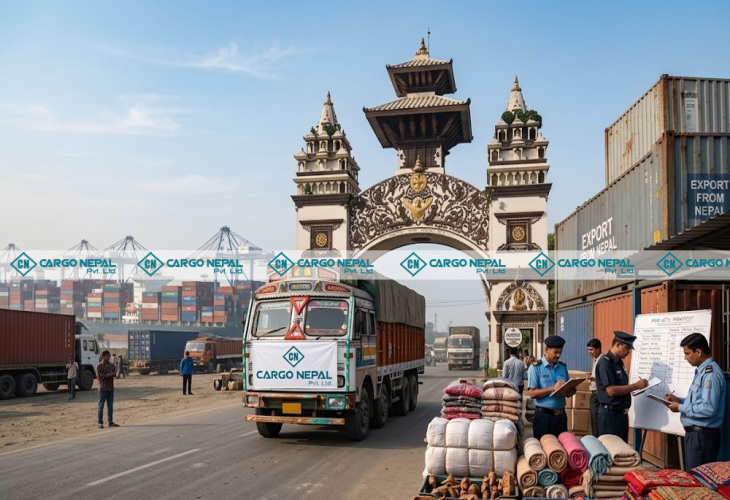
International Shipping from Nepal: 9 Real Challenges Businesses Face & How to Navigate Them
Shipping goods from Nepal to global markets comes with unique hurdles. From customs delays to landlocked geography, here’s what Nepali businesses actually deal with and how freight partners like Cargo Nepal Pvt. Ltd. solve them.
Why International Shipping from Nepal Isn’t as Simple as “Book and Ship”
If you’ve ever tried to send a container from Kathmandu to Rotterdam or air freight pallets to Dubai, you already know this truth: Nepal’s location makes every shipment a puzzle. We’re landlocked. We rely on transit through India or China. Our infrastructure is still catching up to global trade volumes. And the paperwork? Let’s just say it keeps customs agents employed.
But here’s the thing. Thousands of Nepali exporters and importers make it work every single day. Handicrafts reach Paris boutiques. Garments land in US department stores. Machinery comes in for hydropower projects. The difference between shipments that bleed money and ones that arrive smoothly usually comes down to understanding the challenges before they hit your budget. As a freight forwarding company that’s been handling these routes since 2015, Cargo Nepal Pvt. Ltd. has seen the patterns. These are the nine challenges that trip up businesses most often, plus what actually works to get around them.
1. The Landlocked Reality: No Direct Sea Access
Nepal’s biggest structural challenge is geography. We have no seaport. Every ocean freight shipment must first travel overland to Kolkata, Haldia, or Visakhapatnam in India before it ever touches a vessel.
What this means for businesses
· Extra transit time: Kathmandu to Kolkata by road takes 2-4 days in good conditions. During monsoon or strikes, it can stretch to 10+.
· Double handling: Cargo gets loaded in Nepal, unloaded at the Indian port, then loaded again. Each touchpoint is a risk for damage and delay.
· Higher costs: Inland haulage, cross-border fees, and Indian port charges add up fast.
How experienced shippers handle it:
Plan backward from your vessel cut-off date, not forward from your factory date. Build a 7-day buffer into any sea freight schedule. And work with
a forwarder who has agents on the ground in Kolkata. When your truck is stuck at the Birgunj-Raxaul border, you need someone who can make a
phone call in India, not just send an email from Kathmandu.
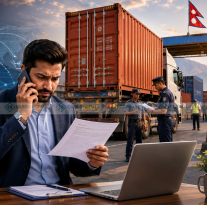
2. Customs Clearance: The Paperwork Bottleneck
Nepal’s Department of Customs has modernized a lot, but importers and exporters still run into surprises. HS code mismatches. Valuation
disputes. Missing certificates. One wrong document can hold your shipment for weeks.
Common pain points we see:
· Incorrect HS Codes: Classifying your product wrong leads to duty overpayment or clearance rejection. Textiles, handicrafts, and medicinal herbs are frequent problem areas.
· Undervaluation Red Flags: Customs compares your declared value to their database. If your invoice looks too low, expect an inspection and potential penalty.
· Lack of Pre-Clearance: Many businesses wait until cargo arrives to start paperwork. By then, demurrage is already ticking.
The advantage of a licensed agent:
At Cargo Nepal, it holds Customs License No. 863/079/080. That means we can pre-check documents, file online declarations, and coordinate
directly with customs officers. For clients, this often cuts clearance time from 5-7 days down to 48 hours. The key is starting the documentation
process while the goods are still in transit to the border.
3. Transit Through India: Rules That Change Without Warning
Most Nepal-bound or Nepal-origin cargo transits India under the Nepal-India Trade and Transit Treaty. In theory, it’s smooth. In practice, Indian
customs, port authorities, and border officials update procedures frequently.
Real examples from the last 2 years:
· Kolkata Port congestion surcharges applied with 72 hours notice during peak season.
· New e-way bill requirements for certain commodity groups moving by road.
· Random container scanning mandates at Haldia that add 3-5 days if you’re unprepared.
For a Nepali exporter, you might not hear about these changes until your truck is already at the border. By then, you’re paying detention charges.
What helps: A freight partner who is part of international networks and gets daily updates from Indian agents. We subscribe to Kolkata Port
circulars and have WhatsApp groups with our counterpart teams there. Information is speed in this business.
4. Air Freight Costs & Capacity Limits
Tribhuvan International Airport in Kathmandu is the main air gateway. But TIA has limited wide-body aircraft slots, weight restrictions, and gets congested during peak export seasons like September-November.
The challenges:
· High rates: Air freight per kg from KTM is often 30-40% higher than from Delhi due to limited competition.
· No direct freighters: Most cargo flies in the belly of passenger aircraft. If tourism drops, so does cargo space.
· Weight vs. volume: Light but bulky items like felt products or pashmina get hit with volumetric weight charges.
Smart work arounds:
For urgent but not emergency cargo, we often truck to Delhi IGIA and fly from there. The road leg adds 2 days but can save 25% on freight cost. For truly time-sensitive goods, we pre-book space 10-14 days ahead during Dashain/Tihar export season. Relationships with airlines matter more than online rate sheets here.
5. Banking and Payment Delays in Trade Finance
International trade needs LCs, TTs, and bank guarantees. In Nepal, banks follow strict NRB directives on foreign exchange. Any mismatch in your LC documents and shipping documents means the bank won’t release payment.
Where businesses get stuck:
· Late submission of B/L or AWB to the bank.
· LC expiry dates that don’t account for Kolkata transit time.
· NRB approval delays for advance payments above certain thresholds.
One client nearly lost a $80,000 order because the BL date was 2 days after the LC’s latest shipment date. The buyer’s bank refused payment.
The fix: Your forwarder should understand trade finance, not just logistics. We coordinate BL dates with your bank and buyer before the container even leaves Birgunj. Sometimes we’ll use a “received for shipment” BL to meet LC deadlines while goods are still trucking to port.
6. Infrastructure: Roads, Warehousing, and Weather
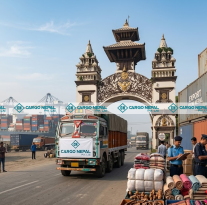
The Birgunj-Kathmandu corridor is the lifeline for trade. But landslides in monsoon, road construction, and traffic jams are normal. A truck that should take 8 hours can take 30.
Add to that limited bonded warehouse space in Kathmandu and cold storage gaps for pharma or agro exports.
What this costs you: Truck detention, missed connections, spoilage.
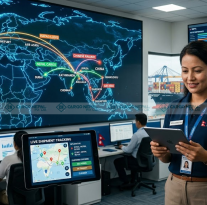
How we mitigate: Real-time GPS tracking on all haulage so clients know exactly where cargo is. For monsoon months, we advise clients to move high-value shipments before mid-June or after September. And for project cargo, we do route surveys ahead of time. You don’t want to discover a bridge can’t take your 40-ton transformer after it’s left the factory.
7. Compliance with International Standards
Buyers in Europe and the US demand more than just goods. They want FSC certificates for wood, GOTS for textiles, fumigation certificates, and ISO documentation from your logistics provider.
Many Nepali SMEs lose orders because they can’t produce the compliance packet.
Why this matters: A German buyer won’t care that your felt is beautiful if you can’t prove the wool is ethically sourced and the shipment is fumigated per ISPM-15.
The role of an ISO 9001:2015 certified forwarder:
Certification means our processes are audited and documented. When your buyer asks for a fumigation certificate or proof of secure handling, we can provide it in 24 hours because the SOP already exists. That’s one reason Cargo Nepal maintains global certifications and network memberships. It’s not just a logo for our website. It’s a tool your sales team can use.
8. Communication Gaps Across Time Zones and Languages
Your buyer is in New York. Your supplier is in Pokhara. Your vessel agent is in Singapore. Your trucker speaks Nepali. If your forwarder isn’t giving you updates in real time, you’re flying blind.
The worst calls we get are from clients saying, “My buyer says the vessel left, but I have no BL. Where are my goods?”
What fast, accurate communication looks like:
· Proactive updates at booking, gate-in, customs cleared, on-board, and arrival.
· One point of contact who knows your account.
· No “I’ll check and get back to you” for 48 hours.
This is where a hands-on, customer-focused approach pays off. We’re a Nepali company, so we understand local supplier delays. But we also operate on global timelines. That balance is essential.
9. Cost Volatility: Freight, Fuel, and Surcharges
Between 2020 and 2026, ocean freight rates from Asia to Europe went from $1,500 to $14,000 and back down to $2,200 per container. Fuel prices jump. India imposes new port fees. Airlines add security surcharges.
If you quote a buyer based on last month’s rate, you might lose money on the deal.
How to protect margins:
· Don’t rely on “rate valid 7 days” quotes for projects with long lead times. Ask for rate ranges instead.
· Use Incoterms wisely: Selling FOB Birgunj vs. CIF Rotterdam shifts who absorbs the Kolkata-to-Europe volatility.
· Consolidate: LCL and groupage services from Cargo Nepal let smaller exporters share container space and stabilize costs.
So, How Do Nepali Businesses Actually Succeed at This?
They don’t do it alone. The companies that export consistently from Nepal all have three things in common:
· They start planning early. International shipping from Nepal needs a 30-45days runway, not 7.
· They invest in documentation. A good commercial invoice and packing list prevent 80% of customs issues.
· They pick logistics partners for expertise, not just price. The cheapest quote often becomes the most expensive shipment.
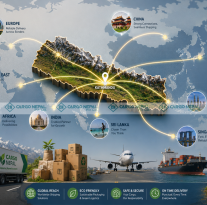
At Cargo Nepal Pvt. Ltd. our job is to remove the guesswork. Our network covers major trade hubs. Our licensed customs agent keeps clearances moving. Our team comes from airlines, shipping lines, and freight forwarding, so we know how each piece fits. International shipping from Nepal will always have challenges. But with the right partner, “landlocked” doesn’t have to mean “locked out” of global trade. Need to move goods in or out of Nepal? Talk to us before your next shipment. We’ll map the route, flag the risks, and give you a timeline you can actually trust.