- Home
- Blogs
- About
- Services
- Group Companies
- Contact Us
- सुचना *

-
Call Us On:
+977 1 5320150, 5320160 -
Send us a Mail:
info@cargonepal.com.np -
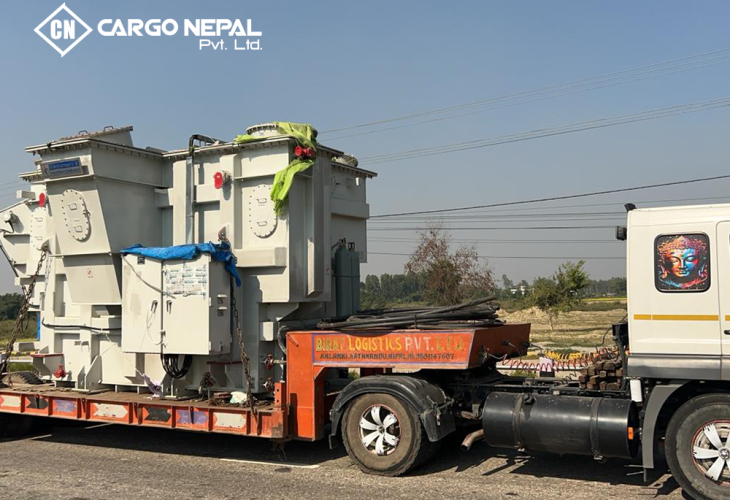
The Logistics of Giants: A Definitive Guide to Project Cargo and Oversized Machinery in Nepal
In the realm of international logistics, there is "standard shipping," and then there is Project Cargo, the high-stakes, adrenaline-fueled reality. When transporting a 60-ton turbine for a hydropower facility or a squadron of large excavators into the rough interior of the Himalayas, the rules shift.
In Nepal, "Logistics of Giants" entails more than merely transporting huge objects from one location to another. It's a sophisticated ballet of engineering, diplomacy, and pure tenacity. Navigating a landlocked country with some of the world's most hazardous terrain demands a masterclass in strategic planning.
Transporting big cargo requires precision, preparation, and skill. In a country like Nepal, where geography ranges from busy metropolitan centers to harsh mountain terrains, moving big and oversized gear becomes even more difficult. Project cargo logistics is vital to supporting infrastructure development, hydroelectric projects, construction, and industrial growth throughout the country. This guide covers everything you need to know about project cargo and oversized machinery logistics in Nepal, providing useful information for firms looking for dependable and effective transportation solutions.
Understanding Project Cargo
Project cargo is defined as the transportation of large, heavy, high-value, or sophisticated equipment. These are frequently required components for large industrial projects including hydropower plants, road construction, telecommunications, and manufacturing facilities.
Unlike regular freight, project cargo includes:
· Detailed route planning.
· Specialized equipment.
· Regulatory approvals
· Coordination of multiple stakeholders
In Nepal, project cargo typically consists of turbines, transformers, construction equipment, industrial machinery, and prefabricated structures.
1. What Defines Project Cargo in the Nepali Context?
Project cargo refers to the domestic or international movement of exceptionally large, heavy, high-value, or technically complex equipment that cannot be handled through conventional shipping methods. In a country like Nepal, where infrastructure development is closely tied to geography and accessibility, project cargo plays a vital role in enabling progress across multiple industries. Broadly speaking, this type of cargo in Nepal falls into three key categories. The first is energy infrastructure, which includes critical components such as turbines, transformers, and penstock pipes used in hydropower projects one of the country’s most important sectors. These items are not only massive in size but also extremely sensitive, requiring careful handling and precise delivery to often remote, mountainous locations. The second category involves construction and mining equipment, such as oversized excavators, drilling rigs, and industrial crushers. These machines are essential for building roads, tunnels, bridges, and extracting raw materials, all of which are fundamental to Nepal’s ongoing development. The third category includes industrial plant machinery, like cement factory kilns and large-scale manufacturing assembly lines, which form the backbone of growing industrial activity in the country.
What sets project cargo apart from regular freight is its non-standard nature. Unlike a typical container shipment that can be easily loaded, sealed, and tracked using a serial number, project cargo demands a far more customized and hands-on approach. Much of this cargo falls under what is known as Out-of-Gauge (OOG) handling. This means the dimensions of the cargo exceed the limits of standard shipping containers whether in height, width, or length making it impossible to transport using conventional containerized methods. As a result, specialized equipment, tailored logistics planning, and detailed coordination become necessary at every stage of the journey. From port handling and customs clearance to inland transportation over challenging terrains, each step must be carefully managed. In Nepal’s context, where narrow roads, steep gradients, and unpredictable weather conditions add further complexity, handling project cargo is not just a logistical task it is a highly strategic operation that requires experience, precision, and adaptability.
2. The Transit Corridor: From Sea to Summit
For a landlocked country like Nepal, the journey begins long before the cargo touches Nepali soil. Since Nepal relies on Indian ports for sea access, the logistics chain is inherently international.
The Maritime Leg (Kolkata, Haldia, and Visakhapatnam)
More than 95% of Nepal’s trade passes through Indian ports. For heavy machinery, the Ports of Kolkata and Haldia are the traditional choices due to proximity, while Visakhapatnam (Vizag) is increasingly favored for its deeper drafts and modern handling equipment.
The Critical Border Crossing: Birgunj and Beyond
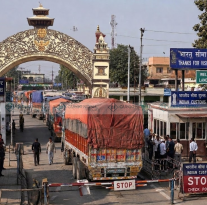
The Birgunj-Raxaul border is the primary gateway for oversized loads. This is where the "bureaucratic marathon" begins. Moving project cargo through the border involves:
Customs Documentation: Precision is everything. A single typo in an HS Code or a valuation error on a commercial invoice can stall a multi-million-dollar project for weeks.
Transshipment: Often, cargo must be moved from Indian trailers to Nepali-registered heavy-duty haulers, requiring massive mobile cranes and specialized labor at the Integrated Check Posts (ICPs).
3. Engineering the Route: Challenges of the Terrain
In most parts of the world, route planning is often as simple as checking traffic conditions, estimating delivery time, and choosing the fastest path. But in Nepal, route planning takes on an entirely different level of complexity it becomes a meticulous, ground-level operation that demands physical inspection and engineering judgment. Logistics teams don’t just rely on maps they often have to measure the height of overhanging power lines, assess narrow road clearances, and carefully evaluate the load-bearing capacity of every bridge along the route. This is especially critical when transporting extremely heavy equipment like transformers or industrial machinery. Many of the bridges along major highways such as the Prithvi Highway or the Tribhuvan Highway were originally designed to handle standard trucks weighing between 10 to 20 tonnes. When cargo weighing 50 tonnes or more needs to pass through, it creates a serious challenge. In such cases, logistics providers may need to reinforce the bridge structure temporarily or, in more extreme situations, create alternative routes by constructing diversions through nearby riverbeds to safely bypass the risk of structural failure.
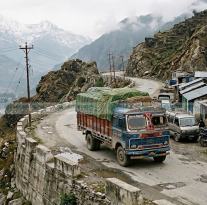
Another unique challenge comes in the form of Nepal’s iconic mountain roads, which are filled with sharp, winding turns known as hairpin bends. While these curves might be manageable for smaller vehicles, they pose a significant obstacle for long-bed trailers carrying oversized items like 12-meter penstock pipes. Navigating these tight corners is often physically impossible with standard trailers. To overcome this, logistics companies rely on advanced multi-axle hydraulic modular trailers equipped with independently steerable rear axles. This technology allows the trailer to maneuver in a snake-like motion, carefully adjusting its angle to pass through even the most challenging bends without compromising safety or stability. On top of these physical challenges, weather plays a major role in determining the success of any project cargo movement. The monsoon season, which typically lasts from June to September, brings heavy rainfall and frequent landslides that can block or completely destroy sections of highways overnight. During this period, transporting oversized cargo becomes highly risky and often impractical. As a result, experienced project managers in Nepal strategically plan their logistics schedules around the dry season, from October to May, when road conditions are more stable and predictable. This careful timing helps reduce delays, avoid costly disruptions, and ensure that these massive shipments reach their destinations safely.
4. The Regulatory Maze: Permits and Compliance
You cannot simply drive a "Giant" into Nepal. It requires a stack of permissions that would intimidate most businesses.
Department of Roads (DoR) Permits: Any vehicle exceeding standard weight or dimension limits needs an "Oversized Load Permit." This involves a declared route and often a police escort.
Nepal Electricity Authority (NEA) Coordination: For tall loads, logistics teams must coordinate with the NEA to temporarily cut or raise overhead power lines.
Environmental Compliance: Large-scale infrastructure projects require an Initial Environmental Examination (IEE) or an Environmental Impact Assessment (EIA), which often includes the impact of transporting heavy machinery through protected forest areas.
5. Case Study: Powering the Future—The TBM & Heavy Machinery Logistics for Marin Sunkoshi diversion and Upper Tamor Hydropower
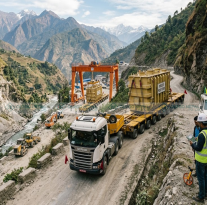
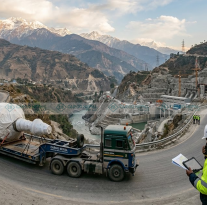
In the world of project cargo, few challenges compare to the transportation of Tunnel Boring Machines (TBMs) and heavy-duty drilling rigs into the remote heart of the Himalayas. Cargo Nepal recently reached a significant milestone by spearheading the logistics for two of Nepal’s most critical energy and irrigation projects: the Marin Sunkoshi Diversion and the 285 MW Upper Tamor Hydropower Project.
The Challenge: Moving the "Earth-Eaters"
Transporting a TBM is not a single shipment; it is a massive logistical puzzle. For the Marin Sunkoshi project, the machine had to bore a 13.1 km tunnel, but before a single inch could be drilled, the massive cutterheads, shields, and multi-ton backup systems had to be moved from international ports to the construction site in Sindhuli.
6. Pro-Tips for Managing Project Cargo in Nepal
If you're managing a project in Nepal, keep these "Golden Rules" in mind:
Hire Local Expertise: An international freight forwarder is wonderful, but you also need a local partner that understands the "ground reality" which bridge is now being repaired or which border official handles heavy gear.
Budget for the "Hidden 30%": Always have a large contingency budget in place to cover port demurrage, border delays, and the expense of specialist cranes.
The "Sequence" Rule states that machinery should arrive in the order in which it needs to be installed. In the narrow building sites of the Himalayas, there is no "storage room" to move heavy equipment around.
Conclusion: Mastering the Himalayan Gauntlet
The "Logistics of Giants" in Nepal is more than just a technical problem; it demonstrates human inventiveness and perseverance. Transporting huge machinery through the world's most formidable mountain range necessitates a unique combination of global logistics norms and hyper-local tenacity. As we've seen, success in this sector is not dependent on a single piece of equipment, but rather on the seamless synchronization of route engineering, bureaucratic knowledge, and a deep appreciation for Nepal's unpredictable landscape.
For the hydropower developers, infrastructure giants, and industrial pioneers building the future of the nation, the logistics partner is the most critical link in the chain. At Cargo Nepal, we understand that a single delay doesn't just cost money; it stalls national progress. By bridging the gap between international ports and remote Himalayan sites, we ensure that the "Giants" of industry reach their destination safely, legally, and efficiently.
As Nepal continues its journey toward becoming a regional energy powerhouse and an industrialized economy, the logistics landscape will continue to evolve. Yet, the core principles will remain the same: meticulous planning, absolute transparency, and the courage to move mountains.