- Home
- Blogs
- About
- Services
- Group Companies
- Contact Us
- सुचना *

-
Call Us On:
+977 1 5320150, 5320160 -
Send us a Mail:
info@cargonepal.com.np -
Cheapest vs Most Expensive Shipping Routes in 2026
Every business that imports or exports products has one thing in common. Shipping costs matter.
Whether you are bringing electronics into Nepal, exporting handmade products to Europe, or sourcing machinery from China, transportation costs directly affect your profits. Even a small increase in freight charges can change the final price of your products and make it harder to compete in the market.
The good news is that not every shipping route is expensive. In fact, some international trade lanes have become more affordable in 2026 as global supply chains continue to recover, while others remain costly due to geopolitical tensions, longer transit routes, congestion at major ports, and fluctuating fuel prices.
Understanding which shipping routes offer better value can help businesses make smarter decisions. It also highlights why choosing an experienced logistics partner is just as important as choosing the right supplier.
At Cargo Nepal Pvt. Ltd., we work with businesses of all sizes to provide reliable freight forwarding solutions that balance cost, speed, and security. With years of experience in international logistics, our goal is to help Nepalese importers and exporters move cargo efficiently while avoiding unnecessary expenses.
Why Shipping Costs Differ Between Routes
Many people assume shipping prices depend only on distance. While distance plays a role, it is far from the only factor.
A container travelling a shorter route can sometimes cost more than one travelling halfway around the world. Several factors influence freight rates, including demand, vessel availability, fuel prices, customs procedures, port infrastructure, seasonal demand, and political conditions.
Busy shipping lanes with regular vessel schedules often benefit from competitive pricing. Less frequently used routes usually have fewer shipping options, leading to higher costs.
Unexpected events can also influence pricing overnight. Port strikes, extreme weather, security risks, or new trade restrictions may force vessels to take longer routes, increasing operational costs.
For businesses in Nepal, these global factors eventually affect the final landed cost of imported or exported goods.
The Cheapest Shipping Routes in 2026
Several international trade corridors remain relatively affordable due to strong demand, efficient port operations, and high shipping frequency.
China to South Asia
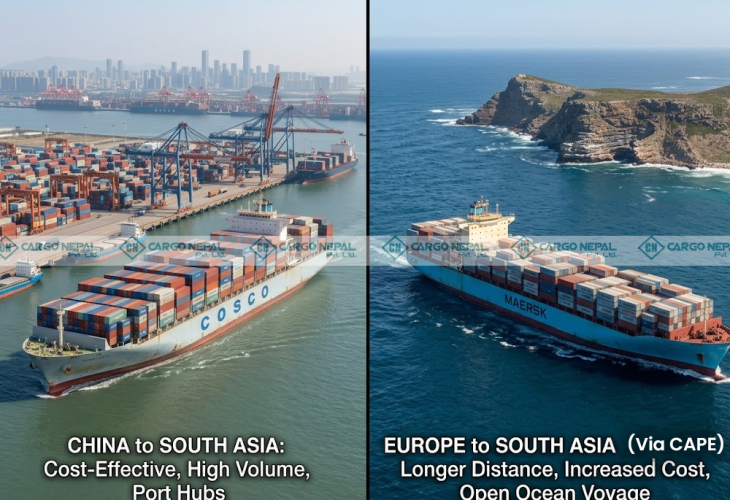
China continues to be Nepal's largest trading partner, making this one of the most cost-effective shipping routes.
Major Chinese ports such as Shanghai, Ningbo, Shenzhen, Qingdao, and Guangzhou operate thousands of container shipments every week. High shipping volume creates competition among carriers, helping keep freight rates comparatively stable.
Many Nepalese businesses import:
Cargo arriving from China generally reaches Nepal through Indian ports before moving inland via road or rail transportation.
Planning shipments in advance and consolidating cargo can further reduce transportation costs.
Southeast Asia to Nepal
Countries like Vietnam, Thailand, Malaysia, Singapore, and Indonesia have become increasingly important manufacturing hubs.
Products such as footwear, textiles, electrical equipment, furniture, and consumer goods move efficiently through major Asian ports.
Because these countries maintain regular shipping schedules and modern port facilities, freight costs often remain competitive.
Many businesses now diversify suppliers across Southeast Asia instead of relying entirely on one country, making this route increasingly attractive.
India to Nepal
Although Nepal is landlocked, trade with India remains one of the country's most efficient logistics corridors.
Cargo moves through multiple border points using road and rail networks, allowing businesses to receive goods faster than many overseas shipments.
Industrial equipment, agricultural products, pharmaceuticals, automotive parts, and consumer goods frequently travel this route.
Lower transit distances generally mean lower transportation expenses and quicker delivery times.
Moderately Priced Global Shipping Routes
Not every route is exceptionally cheap or overly expensive.
Some international trade lanes offer a good balance between affordability and transit time.
Europe to South Asia
European exporters continue sending machinery, industrial equipment, chemicals, pharmaceuticals, luxury goods, and automotive products to Nepal.
Although transit takes longer than regional Asian shipments, improved shipping schedules and efficient European ports help maintain reasonable freight pricing.
Businesses importing high-value products often find sea freight far more economical than air transportation.
Middle East to Nepal
Trade between Nepal and Gulf countries continues to grow.
Construction materials, food products, industrial equipment, and consumer goods move regularly through ports in the United Arab Emirates and Saudi Arabia.
Dubai, in particular, remains an important logistics hub connecting Asia, Europe, and Africa.
Its advanced infrastructure allows cargo consolidation, helping businesses lower transportation costs.
The Most Expensive Shipping Routes in 2026
Some international routes continue facing higher freight costs due to operational challenges.
Red Sea and Suez Canal Region
Security concerns around the Red Sea have forced many shipping companies to reroute vessels around southern Africa.
Instead of passing through the Suez Canal, ships often travel around the Cape of Good Hope, adding thousands of extra nautical miles.
Longer voyages increase fuel consumption, crew costs, insurance premiums, and delivery times.
Businesses importing products from Europe or exporting to Mediterranean markets may notice higher freight charges compared to previous years.
East Coast North America to South Asia
Shipping between eastern North America and South Asia remains relatively expensive.
The journey involves multiple transshipment ports, longer sailing times, and higher inland transportation expenses.
For time-sensitive cargo, businesses often rely on air freight, which significantly increases logistics costs.
Remote Island Destinations
Shipping cargo to smaller islands or isolated regions generally involves limited carrier options.
Lower shipping frequency and smaller cargo volumes result in higher freight rates.
Businesses exporting specialty products to these markets should carefully plan shipments to maximize container utilization.
Air Freight vs Sea Freight
Choosing the right transportation method can have an even greater impact on costs than choosing the shipping route itself.
Sea Freight
Sea freight remains the most economical option for:
Although transit takes longer, the cost per kilogram is significantly lower.
Air Freight
Air freight is ideal for:
Businesses pay a premium for speed, making air cargo suitable only when delivery time is critical.
Cargo Nepal Pvt. Ltd. helps clients evaluate whether air or sea freight offers better value for each shipment.
Hidden Costs Businesses Often Ignore
Many importers compare only freight quotations without considering additional logistics expenses.
These may include:
Ignoring these costs can lead to unpleasant surprises after the shipment arrives.
Working with a professional freight forwarder helps businesses understand the complete logistics cost before shipping begins.
How Nepalese Businesses Can Reduce Shipping Costs
Lower shipping expenses are rarely achieved through luck. They result from proper planning.
Some practical strategies include:
Book early. Last-minute shipments often attract higher rates.
Consolidate cargo. Combining multiple smaller shipments into one container reduces overall transportation costs.
Use the right Incoterms. Understanding international shipping terms prevents unnecessary expenses.
Choose reliable freight partners. Experienced logistics providers often negotiate better carrier rates.
Avoid peak seasons. Shipping before major holidays or busy export periods helps secure competitive pricing.
Ensure accurate documentation. Incorrect paperwork can delay shipments and create extra charges.
Why Freight Forwarders Matter More Than Ever
Global shipping has become increasingly complex.
Businesses now face changing customs regulations, fluctuating freight rates, multiple transportation modes, and evolving trade requirements.
Instead of coordinating separately with shipping lines, customs agents, transport companies, and warehouses, many businesses rely on freight forwarders to manage the entire logistics process.
A trusted freight forwarding partner provides:
This allows businesses to focus on sales and production while logistics professionals manage transportation.
Why Choose Cargo Nepal Pvt. Ltd.
International shipping is about more than moving cargo from one country to another. It is about reliability, communication, and trust.
Cargo Nepal Pvt. Ltd. has built its reputation by providing dependable freight forwarding services for businesses across Nepal. Whether importing commercial goods or exporting Nepalese products to international markets, every shipment receives careful attention from experienced logistics professionals.
Our services include:
Our commitment to Safety, Quality & Professionalism remains at the center of every shipment we handle.
By working closely with global shipping partners and maintaining strong relationships across international logistics networks, we help businesses move cargo efficiently while keeping transportation costs under control.
Looking Ahead
The international shipping industry continues to evolve. Digital documentation, AI-powered route optimization, real-time cargo tracking, and smarter logistics planning are making global trade more efficient than ever.
At the same time, freight rates will continue changing in response to market demand, fuel prices, weather disruptions, and geopolitical developments.
Businesses that stay informed and work with experienced logistics partners will always be in a stronger position to manage costs and maintain reliable supply chains.
How Global Events Continue to Influence Shipping Costs
One lesson businesses have learned over the past few years is that international shipping can change very quickly. A route that is affordable today may become expensive within weeks because of events happening thousands of kilometres away.
In 2026, shipping companies are still adapting to changing trade conditions. Rising fuel prices, changing customs regulations, labour shortages at ports, and regional conflicts all have the potential to affect freight rates. Even severe weather can delay vessels, creating congestion at major ports and pushing prices upward.
For importers and exporters in Nepal, these global events may seem distant, but they have a direct impact on business operations. Delayed shipments can interrupt production schedules, increase inventory costs, and affect customer satisfaction.
This is why businesses should regularly monitor market conditions instead of relying on outdated shipping rates. A trusted freight forwarding partner can provide valuable updates and recommend alternative routes whenever necessary.
Choosing the Right Shipping Route Is More Than Just Finding the Lowest Price
Every business wants to reduce logistics costs, but choosing the cheapest shipping option is not always the smartest decision.
Imagine a shipment that saves a few hundred dollars in freight charges but arrives three weeks later than expected. If those goods are urgently needed for manufacturing or retail sales, the delay could cost much more than the savings.
Businesses should evaluate several factors before selecting a shipping route:
Finding the right balance between cost and reliability usually delivers the best long-term value.
Common Mistakes That Increase Shipping Expenses
Many businesses unknowingly spend more on logistics than necessary. These extra costs are often avoidable with proper planning.
Some of the most common mistakes include:
Waiting Until the Last Minute
Urgent bookings generally come with higher freight charges because fewer shipping options are available.
Incorrect Documentation
Errors in invoices, packing lists, or customs declarations can delay shipments and lead to additional storage or inspection charges.
Poor Packaging
Damaged cargo not only causes financial losses but can also increase insurance claims and replacement costs.
Choosing the Wrong Shipping Method
Sending heavy cargo by air instead of sea freight can significantly increase transportation expenses without providing meaningful business benefits.
Ignoring Cargo Insurance
Some businesses skip cargo insurance to reduce costs. However, one damaged or lost shipment can result in losses far greater than the insurance premium.
Why Planning Ahead Saves Money
Experienced importers rarely arrange shipments at the last minute.
Instead, they forecast inventory requirements months in advance. This allows them to choose slower but more economical shipping options, avoid peak-season surcharges, and consolidate multiple shipments into one container.
Planning ahead also gives businesses more flexibility when selecting carriers and negotiating freight rates.
Even a few weeks of additional planning can produce noticeable savings over the course of a year.
Technology Is Making International Shipping Smarter
The logistics industry has changed dramatically over the past decade.
Modern freight forwarding now relies on digital platforms that improve visibility throughout the shipping process.
Today, businesses can monitor shipments in real time, receive automatic delivery updates, submit electronic customs documentation, and communicate instantly with logistics providers.
Artificial intelligence is also helping shipping companies predict delays, recommend efficient routes, and improve container utilization.
These technologies reduce unnecessary waiting times while improving transparency for customers.
Cargo Nepal Pvt. Ltd. continues to adopt modern logistics practices that help clients enjoy smoother and more efficient international shipping.
Why Businesses Around the World Trust Professional Freight Forwarders
Managing an international shipment involves far more than booking space on a vessel or aircraft.
Every shipment requires accurate documentation, customs compliance, cargo coordination, inland transportation, insurance, and communication with multiple organizations.
For businesses without dedicated logistics teams, this process can become overwhelming.
Professional freight forwarders simplify the entire process by acting as a single point of contact.
Instead of dealing with multiple service providers individually, businesses can rely on one experienced logistics partner to coordinate every stage of the shipment.
This reduces administrative work, minimizes delays, and allows companies to focus on growing their business.
Final Thoughts
International shipping will continue to evolve as global trade grows and supply chains become more interconnected. While some trade routes will remain among the cheapest because of high cargo volumes and efficient infrastructure, others may continue experiencing higher costs due to geopolitical uncertainty, longer transit distances, or limited shipping capacity.
The most successful businesses are not necessarily the ones paying the lowest freight rates. They are the ones making informed logistics decisions, planning shipments carefully, and working with reliable freight partners who understand international trade.
At Cargo Nepal Pvt. Ltd., we believe that successful logistics is built on trust, transparency, and long-term partnerships. From freight forwarding and customs clearance to project cargo and supply chain solutions, our experienced team is committed to delivering dependable services that meet the unique needs of every client.
Whether you are importing goods into Nepal or exporting products to international markets, we are here to make the shipping process simpler, safer, and more cost-effective.
With our commitment to Safety, Quality & Professionalism, Cargo Nepal Pvt. Ltd. continues to help businesses connect Nepal with the world, one shipment at a time.